KISS10-5
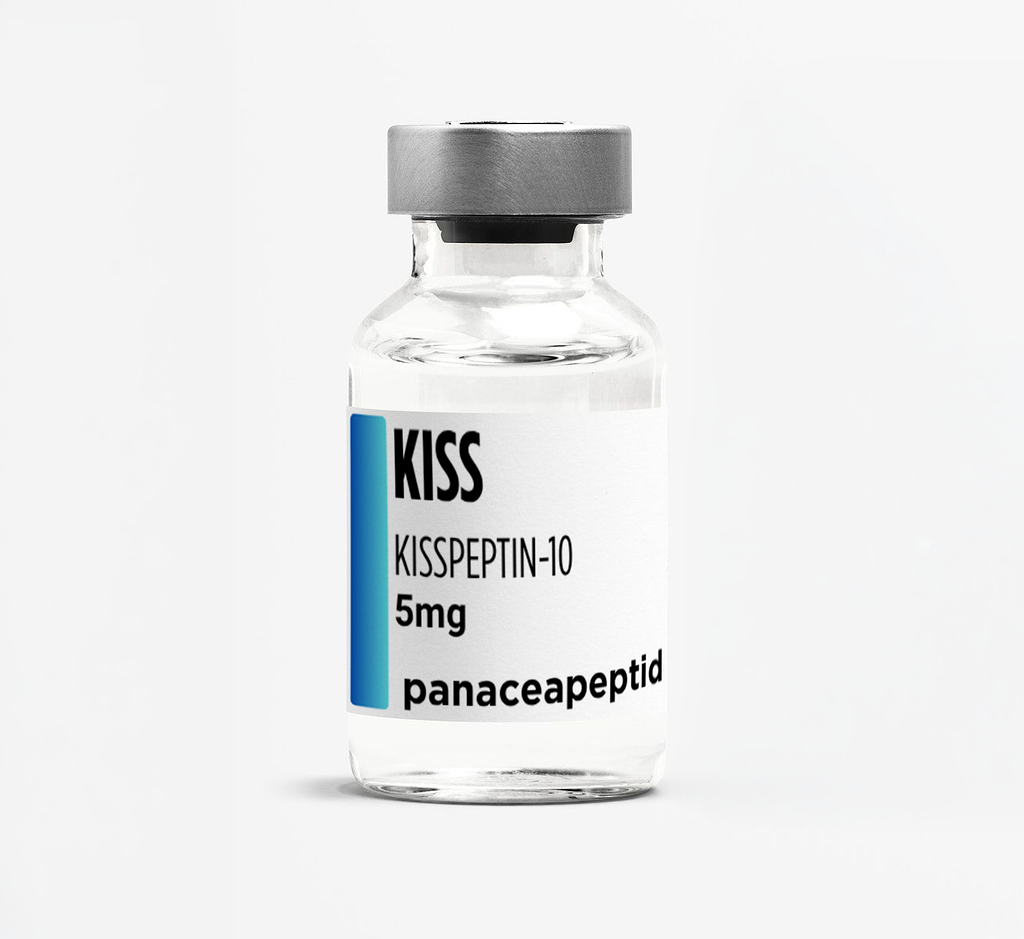
Kisspeptin-10 5mg
SHORT DESCRIPTION
Kisspeptin-10 is known as the "master switch" of the reproductive system. It is a powerful neuropeptide that triggers the release of Gonadotropin-Releasing Hormone (GnRH), which in turn signals the pituitary gland to produce Luteinizing Hormone (LH) and Follicle-Stimulating Hormone (FSH). Kisspeptin-10 is the shortest active fragment of the kisspeptin protein. Unlike HCG, which mimics LH to talk to the testes, Kisspeptin talks to the brain, making it a more "complete" hormonal signal.
Key Benefits
Natural Testosterone Boost: Stimulates your own body to produce testosterone rather than replacing it with synthetic versions.
Fertility Support: Promotes the production of FSH, which is critical for sperm quality and count.
HPTA Recovery: Helps "restart" the hormonal axis after suppression from steroids or SARMs.
Mood & Libido: Has direct receptors in the brain's limbic system, often leading to improved sexual desire and emotional well-being.
Pros:
Upstream Activation: It engages the entire hormonal chain from the brain down to the gonads.
No Testicular Desensitization: Because it uses the body's natural pulsatile rhythm, it carries a lower risk of "burning out" the testes compared to high-dose HCG.
Weight Management: Some studies suggest it plays a role in regulating metabolism and glucose.
Cons:
Short Half-Life: It leaves the system very quickly (minutes), often requiring frequent administration.
Variable Response: Effectiveness can vary based on an individual's baseline hormonal health.
Research Status: It is less "tried and tested" in long-term human clinical trials compared to HCG.
This product is for research purposes only and is NOT for human consumption. Intended for use by qualified researchers and institutions only.
RESEARCH AND PRACTICAL APPLICATIONS
Based on research and anecdotal reports in biohacking communities. It does not constitute medical advice. Consult a qualified healthcare provider before initiating any hormone or peptide protocol, as misuse can lead to serious health risks.
When transitioning from clinical settings to performance-focused protocols, the objective often shifts from treating a medical deficiency to maintaining physiological function during the use of exogenous hormones (such as Testosterone).
Kisspeptin-10
Kisspeptin-10 operates further "upstream" in the endocrine system, signaling the brain to release Gonadotropin-Releasing Hormone (GnRH), which then stimulates the pituitary gland to produce both LH and Follicle-Stimulating Hormone (FSH). (Endocrinology and Metabolism)
Mechanism: It is utilized for attempting to restore the Hypothalamic-Pituitary-Testicular Axis (HPTA).
Administration: It is often used to support the brain-to-gonad signal during periods of hormonal suppression.
Important Considerations for Kisspeptin-10:
Axis Engagement: Unlike HCG, which only acts on the testes, Kisspeptin stimulates the entire HPTA axis.
Timing: Some reports suggest administering it in the evening to align with natural physiological pulses. (OptiMantra)
Expected Results & Timeline
Hours 1–6: Acute Pulse: A measurable spike in LH and GH (Growth Hormone) levels occurs shortly after injection.
Days 1–7: Subjective Shifts: Many users report an immediate increase in libido, "morning wood," and improved mood/energy.
Weeks 2–4: Hormonal Stabilization: Natural testosterone levels begin to climb and stabilize. Testicular fullness usually returns if atrophy was present.
Months 1–3 Cumulative Benefits Improved body composition, better recovery from exercise, and optimized fertility markers (if tracked via semen analysis).
Monitoring and Safety:
Individual Response: Responses to peptides can vary significantly.
Medical Oversight: Due to the complexity of the endocrine system, professional medical monitoring is strongly advised to prevent overstimulation or improper hormone balance.
HCG (Human Chorionic Gonadotropin)
HCG acts as an analog of Luteinizing Hormone (LH), acting directly on the testes to maintain testicular volume (preventing atrophy) and support spermatogenesis (fertility). (www.edenclinic.co.uk)
Clinical Application: In medical contexts, HCG is used to stimulate natural testosterone production or treat infertility.
Biohacking/Performance Protocols: Common approaches often involve lower, frequent doses during a testosterone cycle to maintain testicular function.
Administration: Some users prefer smaller, more frequent injections (subcutaneous) to manage potential increases in estrogen conversion. (www.edenclinic.co.uk)
Important Considerations for HCG:
Aromatization: High-dose HCG can cause a significant increase in estrogen.
Desensitization: Sustained, high-dose use of HCG may lead to desensitization of the Leydig cells in the testes. (Male Infertility Guide)
PCT - Post Cycle Therapy
In a post-TRT (Testosterone Replacement Therapy) recovery protocol, often called Post-Cycle Therapy (PCT), the goal is to restart the body's natural production of testosterone by restoring the Hypothalamic-Pituitary-Gonadal (HPG) axis.
While HCG is often used as a base because it mimics Luteinizing Hormone (LH) to directly signal the testes to produce testosterone, other peptides and medications target different parts of the recovery cascade.
Hormonal Recovery Peptides & Analogues
Kisspeptin-10: Acts further upstream than HCG. It triggers the hypothalamus to release natural GnRH, which then tells the pituitary to produce both LH and FSH. This is considered more "physiological" than HCG because it restarts the entire cascade naturally.
Gonadorelin Acetate: A synthetic version of Gonadotropin-Releasing Hormone (GnRH). It bypasses the hypothalamus to directly stimulate the pituitary gland to release LH and FSH. It has a very short half-life (minutes), which can make effective dosing difficult without frequent administration.
Triptorelin: A potent GnRH agonist. While it can cause a massive release of LH and FSH initially, repeated or high doses can lead to pituitary desensitization, potentially shutting down the axis further instead of recovering it.
Libido and Performance Support
PT-141 (Bremelanotide): Unlike the others, PT-141 does not help with hormonal recovery or testosterone production. It is a melanocortin agonist that works on the central nervous system to enhance libido and sexual arousal directly. It is frequently used during PCT to manage "post-cycle" libido crashes while the natural axis is still recovering. (BioDesign Men's Clinic)
Traditional Non-Peptide Recovery Agents
SERMs (Selective Estrogen Receptor Modulators): Medications like Clomid (Clomiphene Citrate) and Nolvadex (Tamoxifen Citrate) are the traditional "gold standard" for PCT. They work by blocking estrogen's negative feedback in the brain, tricking the body into thinking it needs to produce more testosterone.
Aromatase Inhibitors (AIs): Drugs like Arimidex or Aromasin may be used to control estrogen levels if they spike during the restart process. (Rise Men's Health)
Dosing Protocols
Dosing schedules for post-TRT recovery vary based on the compounds used and the severity of the initial suppression. Below are common clinical and research-based protocols for the peptides and medications mentioned.
1. Human Chorionic Gonadotropin (hCG)
hCG is typically the first step to "prime" the testes before transitioning to other agents.
Standard Recovery Dose: 1,500 IU to 5,000 IU injected subcutaneously (SubQ) or intramuscularly (IM) 2–3 times weekly for a duration of 3 to 6 months.
Alternative High-Dose Protocol: 3,000 IU SubQ 3 times per week for the initial 2–4 weeks of recovery.
Physiological Mimicry: Doses of 250–500 IU every other day are sometimes used to maintain baseline function with less risk of estrogen spikes. (Male Infertility Guide)
2. Kisspeptin-10
Kisspeptin-10 is often used as a follow-up to hCG or as a replacement for high-dose SERMs to stimulate the hypothalamus.
Subcutaneous (SubQ) Protocol: 100 mcg to 200 mcg injected twice weekly.
Timing: It is sometimes administered in a fasted state, as animal data suggest a better LH response.
Frequency Warning: Daily use is generally avoided to prevent receptor desensitization, which could lead to the opposite effect—further suppression of testosterone.
3. Gonadorelin Acetate
Because of its very short half-life (approximately 4 minutes), Gonadorelin is most effective when delivered in a "pulsatile" manner. (eMC)
Diagnostic/Bolus Dose: A single injection of 100 mcg is often used just to test pituitary responsiveness.
Pulsatile Protocol (Clinical): 5 mcg to 20 mcg delivered every 90 to 120 minutes via a specialized infusion pump.
Off-Label Recovery: In settings where a pump is not used, it is sometimes dosed at 100 mcg–200 mcg SubQ, though its efficacy for a sustained "restart" without a pump is debated. (eMC)
4. PT-141 (Bremelanotide)
This peptide is used strictly for managing libido and erectile function during the recovery phase.
Standard Dose: 1.75 mg to 2 mg injected SubQ roughly 45 minutes to 2 hours before sexual activity.
Test Dose: For first-time users, a 1 mg test dose is often recommended to assess tolerance, adding the remaining 1 mg after 30 minutes if no adverse reactions occur.
Usage Limits: It should not be used more than once every 24 hours or more than 8 times per month. (Mayo Clinic)
5. SERMs (Clomid / Nolvadex)
Selective Estrogen Receptor Modulators (SERMs) are frequently combined with the peptides above to ensure the HPG axis continues to fire once hCG is stopped.
Clomid (Clomiphene): 25 mg to 50 mg daily for 4 to 6 weeks.
Nolvadex (Tamoxifen): 20 mg to 40 mg daily for 4 to 6 weeks, often tapered down to 10 mg or 20 mg in the final weeks. (Swolverine)
Compound Typical Dose Frequency Primary Purpose
hCG 1,500 – 3,000 IU 3x weekly Testicular stimulation
Kisspeptin-10 100 – 200 mcg 2x weekly Hypothalamic restart
Gonadorelin 10 0 mcg Single dose (Test)Pituitary stimulation
PT-141 1.75 – 2 mg As needed Libido support
Clomid 25 – 50 mg Daily Pituitary feedback
To monitor your progress and ensure your HPG axis is successfully restarting, you should use a combination of hormonal and safety blood tests. Most clinicians recommend a full panel roughly 4–6 weeks after finishing your protocol to confirm your body has taken over natural production. (MomMed)
1. Essential Hormonal Markers
These tell you if the "restart" actually worked and where the communication might be failing: (Lola Health +1)
Total & Free Testosterone: Measures the end goal—adequate circulating testosterone. Total T should ideally return to your pre-TRT baseline.
LH (Luteinizing Hormone): This is the most critical marker for recovery. If LH is low, your pituitary is still suppressed; if LH is normal/high but testosterone is low, the issue is at the testicular level.
FSH (Follicle-Stimulating Hormone): Crucial for assessing fertility and sperm production recovery.
SHBG (Sex Hormone-Binding Globulin): Used to calculate your Free Testosterone, which is the biologically active form.
Oestradiol (Sensitive Assay): High estrogen can inhibit the HPG axis, slowing down your recovery. Monitoring this helps determine if you need an aromatase inhibitor.
Prolactin: High levels can directly suppress the release of GnRH and LH, stalling your progress.
PubMed Central (PMC) (.gov) +6
2. Health & Safety Markers
These ensure the recovery agents (like hCG) aren't causing unwanted side effects:
Lola Health +2
Full Blood Count (FBC/CBC): Specifically looks at Haematocrit and Haemoglobin. Testosterone (even natural) stimulates red blood cell production. If haematocrit exceeds 0.54 (54%), it can significantly increase blood clot risks.
Lipid Panel: TRT often lowers "good" HDL cholesterol; monitoring this tracks your cardiovascular recovery.
Liver Function (ALT/AST): Essential if you are using oral SERMs (like Clomid or Nolvadex) as part of your recovery, as these can occasionally stress the liver.
PSA (Prostate-Specific Antigen): Important for men over 40 to monitor prostate health as hormone levels shift. (The Men’s Health Clinic)
Timing Your Tests
During Protocol (Mid-Cycle): Check Total T, Oestradiol, and Haematocrit to ensure you aren't spiking too high.
Post-Protocol (The "Final" Check): Wait at least 4 weeks after your last dose of SERMs or peptides. This ensures the drugs are out of your system and you are measuring natural production only. (MomMed)
For a successful post-TRT recovery, the goal is for your blood markers to return to the healthy physiological ranges of a man with a functioning HPG axis.
1. Primary Recovery Targets
These levels indicate that your brain (hypothalamus/pituitary) and testes are communicating correctly.
Total Testosterone: Aim for 450–700 ng/dL (roughly 15–25 nmol/L). While labs often list a broader "normal" range (300–1,000 ng/dL), the mid-to-upper range is where most men report optimal symptom relief.
LH (Luteinizing Hormone): The target is 2.0–9.0 IU/L. A result in this range confirms your pituitary gland has successfully restarted. If LH is very high but testosterone is low, it may suggest the testes are not responding properly.
FSH (Follicle-Stimulating Hormone): Target 1.5–12.4 IU/L. This is the primary indicator that sperm production is returning.
Free Testosterone: Aim for 0.4–0.62 nmol/L. This is arguably more important than total testosterone, as it represents the hormone available for use by your tissues. (American Urological Association)
2. Secondary & Balancing Markers
Maintaining the right balance between these hormones is key to avoiding "post-cycle" side effects like mood swings or low libido.
Oestradiol (Sensitive Assay): Ideal levels are typically 20–40 pg/mL (roughly 75–150 pmol/L).
T:E Ratio: A healthy ratio is often considered between 10:1 and 30:1 (Total T in ng/dL divided by Estradiol in pg/mL).
SHBG (Sex Hormone-Binding Globulin): Target 20–50 nmol/L. Very high SHBG can "trap" your testosterone, leaving you with low Free T even if your Total T looks good.
Prolactin: Should be kept in the lower half of the lab's reference range (usually <15 ng/mL). High prolactin can directly shut down the HPG axis recovery you are working toward.
PubMed Central (PMC) (.gov)
3. Safety & General Health Markers
Haematocrit: Must remain below 54%. If it exceeds this, your blood may be too thick, increasing the risk of clots.
Lipid Panel: Ensure HDL ("Good") Cholesterol is over 40 mg/dL. Recovery often involves seeing these numbers improve after being suppressed by exogenous testosterone.
PSA: For men over 40, PSA should ideally stay below 1.4 ng/mL or show minimal change from your pre-TRT baseline. (Lola Health)
Marker Optimal Target Range Units
Total Testosterone 450 – 700 ng/dL
Free Testosterone 0.4 – 0.62 nmol/L
LH 2.0 – 9.0 IU/L
FSH 1.5 – 12.4 IU/L
Oestradiol (E2) 20 – 40 pg/mLHa
ematocrit >52% (Safe up to 54%)%
Research Use Only
These instructions are for research purposes. Use under medical professional supervision.