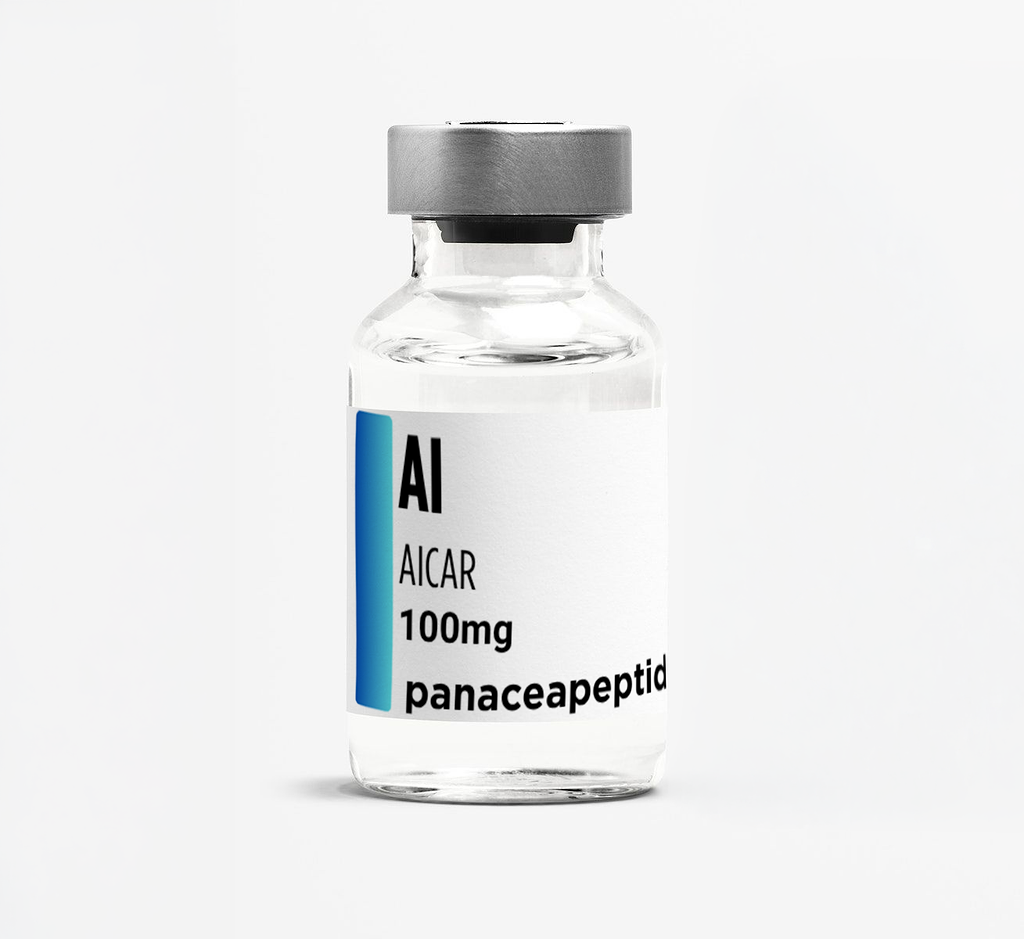
AICAR-10
Aicar 10mg

SHORT DESCRIPTION
AICAR (5-aminoimidazole-4-carboxamide-1-β-D-ribofuranoside) is a synthetic analog of adenosine monophosphate (AMP).
It is widely known as an "exercise mimetic" or "exercise in a pill" because of its ability to stimulate the body's metabolic pathways in a way that resembles physical activity.
Core Mechanism:
AMPK Activation AICAR's primary function is as a potent activator of AMP-activated protein kinase (AMPK). Energy Regulation: AMPK acts as a "master switch" for metabolism. When energy levels are low (high AMP/ATP ratio), it shifts the body from storing energy to burning it.
Metabolic Shift:
Once activated, AICAR causes cells to use more fat for energy and stimulates the production of new mitochondria (the cell's powerhouses). Potential Research Benefits: In animal and laboratory studies, AICAR has demonstrated several performance and health-related properties:
Endurance Enhancement:
Studies in sedentary mice showed a 44% increase in running endurance after 4 weeks of treatment without any actual training.
Fat Loss:
It has been shown to reduce abdominal fat and lower plasma triglycerides by promoting fatty acid oxidation.
Insulin Sensitivity:
Research indicates it can improve glucose uptake in skeletal muscle, which may help manage symptoms of Type 2 diabetes.
Cardio Protection:
It has been investigated for its ability to protect heart tissue during surgery (ischemia-reperfusion injury).
Cancer Research:
It is being studied for potential anti-leukemic effects, particularly in B-cell chronic lymphocytic leukemia.
Safety and Side Effects:
AICAR is not widely used in humans due to complex side effects and administrative challenges: Side Effects: High doses have been linked to serious renal (kidney) toxicities, transient anemia, and hypotension (low blood pressure). Uric Acid: Excessive use can lead to hyperuricemia (high uric acid levels). Administration: It has very poor oral bioavailability (<5%), meaning it is almost ineffective if swallowed. In clinical trials, it is typically administered via continuous intravenous (IV) infusion.
This product is for research purposes only and is NOT for human consumption. Intended for use by qualified researchers and institutions only.
RESEARCH AND PRACTICAL APPLICATIONS
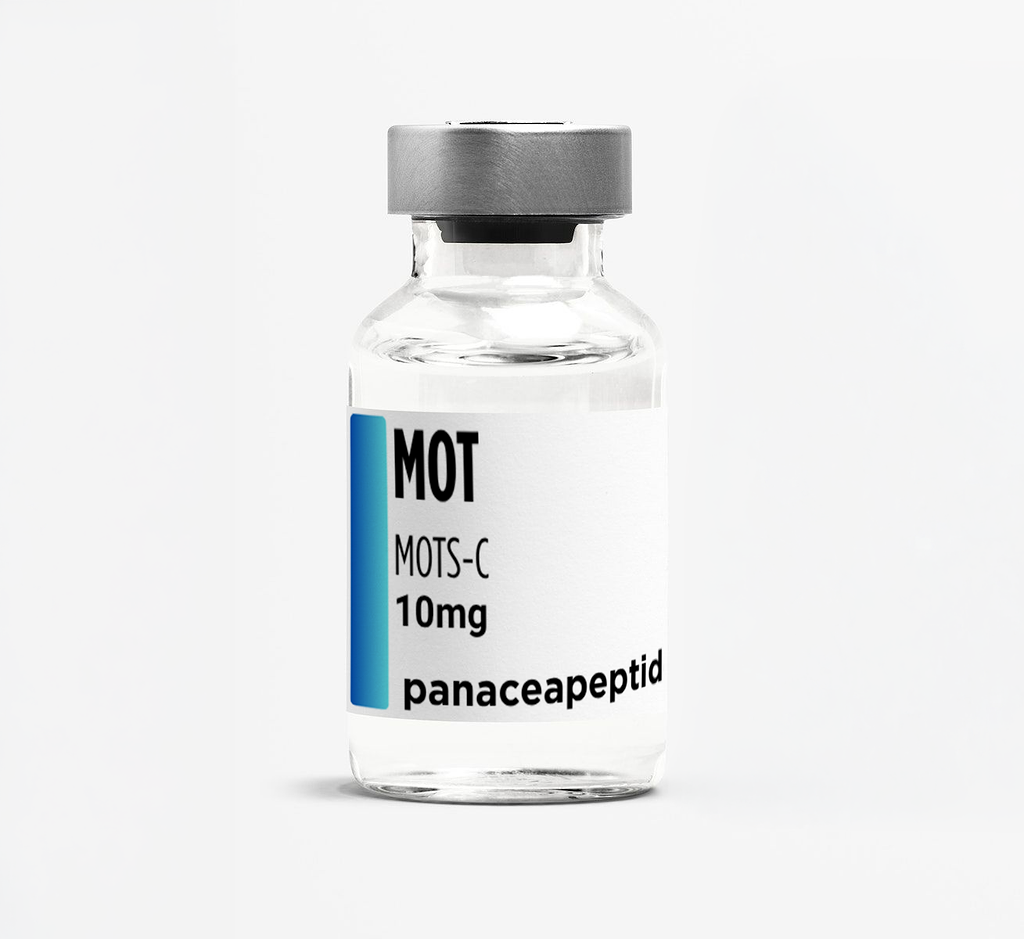
ACAIR vs MOTS-c
While both AICAR and MOTS-c target the AMPK pathway to mimic the metabolic benefits of exercise, they differ fundamentally in origin and scope: AICAR is a synthetic compound that directly activates AMPK, whereas MOTS-c is a naturally occurring mitochondrial peptide that regulates overall energy metabolism and cellular stress responses.
Introductory Description
AICAR is a potent, synthetic "exercise mimetic" designed to force cells into a high-endurance, fat-burning state without physical exertion.
MOTS-c, the "Mitochondrial ORF derived-peptide from the 12S rRNA type-c," is a protective hormone produced by your own mitochondria that coordinates metabolic health, insulin sensitivity, and longevity. (ScienceDirect.com)
Mechanism of Operation
AICAR: Acts as a direct analog of adenosine monophosphate (AMP). It binds to and activates AMP-activated protein kinase (AMPK), tricking the body into thinking energy is depleted, which triggers immediate fat oxidation and glucose uptake.
MOTS-c: Works "upstream" by disrupting the folate-methionine cycle. This causes a natural buildup of endogenous AICAR, which then activates AMPK. Additionally, MOTS-c translocates to the nucleus to regulate stress-adaptation genes and improve mitochondrial efficiency. (PubMed Central (PMC) (.gov))
Pro's & Cons
Pros:
AICAR: Rapidly increases endurance and fat burning; effective even in sedentary states.
MOTS-c: Improves insulin sensitivity, prevents age-related weight gain, and supports bone health and longevity.
Cons:
AICAR: High risk of side effects; purely synthetic; easily detected in doping tests.
MOTS-c: Requires frequent administration; primarily studied in animals with limited human validation; high cost. (PubMed Central (PMC) (.gov))
Safety
AICAR: Experimental and not approved for human use. High doses can cause serious side effects, including neurodegeneration, metabolic disorders, and interference with cell division.
MOTS-c: Considered experimental. While naturally occurring, supplemental use is not FDA-approved and lacks long-term human safety data. (www.usada.org)
Legal Status
AICAR: Banned by WADA since 2009 as a "Metabolic Modulator" (S4.4). It is not available as an approved medication.
MOTS-c: Also prohibited by WADA at all times under Section 4.4. It is not FDA-approved for any human therapeutic use. (www.usada.org +3)
Practical Application & Example Conditions
AICAR: Historically researched for cardiovascular protection during surgery and as a performance enhancer for sedentary endurance.
MOTS-c: Targeted for Type 2 Diabetes, obesity, metabolic syndrome, and age-related muscle/bone decline. (PubMed Central (PMC) (.gov))
What Can Be Expected (Timeline)
AICAR: Acute effects on endurance can be seen within days; however, significant metabolic shifts typically require 4+ weeks of administration.
MOTS-c: Improved insulin markers may appear in 1–2 weeks, while body composition changes and anti-aging benefits typically manifest over 8–12 weeks of consistent use. (World Anti Doping Agency)
Dosing in Longevity / Biohacking Space
AICAR (Optimization): Anecdotal biohacking reports suggest doses ranging from 10mg to 50mg per day, though clinical safety data is non-existent.
MOTS-c (Maintenance vs Optimization): Maintenance is often cited at 5mg once or twice per week. Optimization for performance or fat loss may involve 5mg–10mg three times per week, often in 4–6 week cycles. (www.usada.org)
Optimization Checklist (Supportive Supplements)
NAD+ Precursors (NMN/NR): Synergizes with both to enhance mitochondrial energy production.
CoQ10 / PQQ: To support the increased mitochondrial biogenesis triggered by AMPK.
Alpha-Lipoic Acid (ALA): Further supports glucose disposal and insulin sensitivity.
Resveratrol: Another natural AMPK activator that may amplify the "exercise mimetic" effect. (Cell Press)
Benefits of Peptide Therapy vs. Regular Clinical Protocols
Regular protocols for metabolic health often rely on chronic medications like Metformin, which can have digestive side effects and may lower B12 levels.
Peptide therapy like MOTS-c aims to restore innate mitochondrial signaling, potentially providing a more targeted metabolic "reset" that mimics the multi-system benefits of vigorous exercise rather than just suppressing blood sugar.
Research Use Only
These instructions are for research purposes. Use under medical professional supervision.
Reconstitution Instructions
Dosing Instructions
Common Doses
Syringe Recommendations
Storage Instructions
You May Also Like