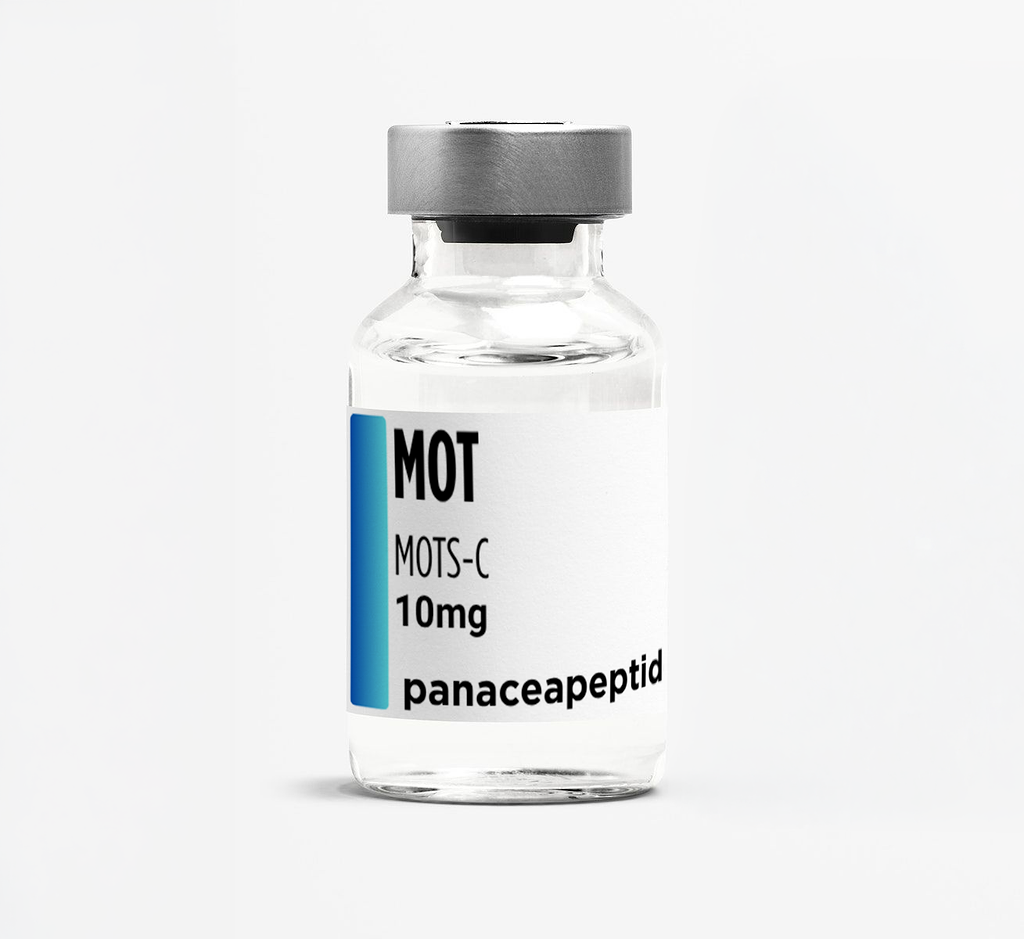
MOTS-10
MOTS-c 10mg
SHORT DESCRIPTION
MOTS-c
MOTS-c (Mitochondrial Open Reading Frame of the 12S rRNA type-c) is a unique "mitochondrial-derived peptide" that acts as a systemic hormone to regulate metabolic homeostasis, insulin sensitivity, and physical performance.
Introductory Description
Often called the "exercise mimetic" or the "longevity peptide," MOTS-c is a 16-amino acid peptide encoded within the mitochondrial genome rather than the cell nucleus. It serves as a critical signaling link between the mitochondria and the rest of the body, essentially "tricking" the system into a state of high-efficiency energy metabolism typically achieved only through vigorous physical exercise.
YouTube Video's of Value
Dr Trevor Bachmayer on: MOTS-C or SS-31 A Comprehensive Guide https://www.youtube.com/watch?v=htj0KqZ4uls
Dr Trevor Bachmayer on: MOTS-C The Ultimate Peptide? https://www.youtube.com/watch?v=5uFCP3t0i5I
Dr Trevor Bachmayer on: MOTS-C Masterclass (with SS-31) https://www.youtube.com/watch?v=0Wfbn9GjTqs&t=2069s
Dr Trevor Bachmayer on: MOTS-C, NAD+ and SS-31 (solving mitochondrial damage) https://www.youtube.com/watch?v=lAdPLuyggFw&t=1s
Dr Trevor Bachmayer on: Does MOTS-C Make You Tired? Here's the solution https://www.youtube.com/watch?v=xsxq0Lb0kps
Dr Trevor Bachmayer on: MOTS-C or Retatrutide Which One Is Better https://www.youtube.com/watch?v=0qBMBO-6xIE&t=1828s
Dr Trevor Bachmayer on: MOTS-C versus Metformin For Longevity https://www.youtube.com/watch?v=aE1L6rZwsSY
Regan Archibald on: MOTS-c Peptide Bodybuilding Dosage https://www.youtube.com/watch?v=c_hX_gNo-Rc&t=48s
This product is for research purposes only and is NOT for human consumption. Intended for use by qualified researchers and institutions only.
RESEARCH AND PRACTICAL APPLICATIONS
Mechanism of Operation of Mots-C
MOTS-c functions by modulating the folate-methionine cycle, which leads to a series of downstream metabolic shifts:
AMPK Activation: It increases levels of AICAR (a metabolic intermediate), which in turn activates AMP-activated protein kinase (AMPK), the body’s master energy sensor.
Glucose Uptake: It enhances glucose disposal into skeletal muscle cells independently of insulin, helping to clear blood sugar more efficiently.
Fatty Acid Oxidation: It promotes the breakdown of fats for fuel, reducing the accumulation of adipose tissue.
Mitochondrial Biogenesis: It signals the cell to produce more mitochondria, increasing the overall "power output" of the cell.
Pro's & Cons
Pros: Potent fat loss agent; significantly improves exercise endurance; reverses insulin resistance; supports bone density; mimics the anti-aging benefits of exercise.
Cons: Requires every-other-day subcutaneous injections; relatively high cost; limited long-term human data.
Safety
Mots-C is generally considered well-tolerated because it is an endogenous peptide (naturally produced by the body).
Side Effects: Minimal; primarily injection site redness or mild lethargy immediately following a dose as the body shifts metabolic states.
Hypoglycemia: Because it increases glucose uptake, those on insulin or diabetes medication should monitor blood sugar closely to avoid "crashes."
Legal Status
USA/Global: MOTS-c is currently classified as a "Research Chemical" and is not FDA-approved for human use or as a dietary supplement.
WADA: It is strictly prohibited in competitive sports under the "S4. Metabolic Modulators" category.
Practical Application & Example of Conditions
Type 2 Diabetes & Insulin Resistance: Restoring metabolic flexibility and lowering blood sugar.
Obesity: Accelerating fat loss by increasing the basal metabolic rate.
Sarcopenia & Osteoporosis: Protecting muscle mass and bone mineral density in aging populations.
Athletic Performance: Increasing time to exhaustion and recovery speed in endurance athletes.
What Can Be Expected (Timeline)
Weeks 1–2: Subtle increase in daily energy levels and improved stamina during workouts.
Weeks 3–6: Noticeable improvements in body composition (fat loss) and significantly enhanced insulin sensitivity.
Month 3+: Structural improvements in metabolic health and potential reversal of age-related metabolic decline.
Dosing in Longevity / Biohacking Space - Maintenance vs Optimization
Maintenance (Longevity): 5mg injected subcutaneously once per week. This is often used for general mitochondrial support and anti-aging.
Optimization (Fat Loss/Performance): 5mg to 10mg injected subcutaneously three times per week (e.g., Monday/Wednesday/Friday). This higher frequency is typically used in 4–6 week cycles to "reset" metabolism.
Optimization Checklist (Supportive Supplements)
NAD+ Precursors (NMN/NR): Provides the cellular fuel needed for the mitochondria to function at the higher rate signaled by MOTS-c.
CoQ10 (Ubiquinol): Essential for the electron transport chain within the new mitochondria being produced.
Alpha-Lipoic Acid (ALA): Synergizes with MOTS-c to further improve insulin sensitivity and glucose disposal.
Resveratrol/Pterostilbene: Natural AMPK activators that may amplify the exercise-mimetic effects.
Benefits of Peptide Therapy vs. Regular Clinical Protocols
Standard clinical protocols for metabolic issues often involve Metformin, which can cause significant GI distress and may actually inhibit certain exercise adaptations.
MOTS-c therapy provides a more "physiologically native" approach. Instead of merely blocking glucose production in the liver, it restores the body's natural mitochondrial communication, effectively "teaching" the cells to burn fuel and produce energy more efficiently—just as they did during your youth.
Stacking Mots-C with NAD+
The MOTS-c and NAD+ Stack (often called the "Mito Stack") is a high-level mitochondrial reset protocol that combines a powerful metabolic signaling peptide with the essential coenzyme "fuel" required for all cellular energy production.
This stack represents a "Signal and Fuel" approach to cellular health: MOTS-c acts as the exercise-mimetic signal that instructs the body to build more and better mitochondria, while NAD+ provides the high-octane fuel and repair currency those new mitochondria need to function. Together, they are used to reverse age-related metabolic decline, eliminate deep-seated fatigue, and optimize physical and cognitive stamina.
Mechanism of Operation
MOTS-c (The Architect): Triggers AMPK activation, signaling the cell to enter a state of high-efficiency metabolism similar to vigorous exercise. It promotes mitochondrial biogenesis (the creation of new mitochondria) and improves fuel flexibility, allowing cells to burn both fats and sugars more effectively.
NAD+ (The Fuel): Acts as the primary electron carrier in the Electron Transport Chain, where ATP (energy) is produced. It also activates sirtuins, the enzymes responsible for DNA repair and cellular maintenance, which are "spent" more rapidly when MOTS-c signals the body to upgrade its metabolic machinery.
Synergy: MOTS-c builds the "engines" (mitochondria), and NAD+ provides the "gasoline". Without NAD+, new mitochondria are often "empty shells" that cannot produce energy efficiently; without MOTS-c, NAD+ simply fuels an aging, inefficient fleet of mitochondria.
Pro's & Cons
Pros: Dramatic improvements in endurance and recovery; potent fat oxidation; enhanced mental clarity; directly addresses "GLP-1 fatigue".
Cons: Can be expensive; NAD+ injections can cause temporary "flushing" or chest tightness if administered too quickly.
Safety
This stack is considered advanced and experimental.
NAD+ Flushing: Rapid subcutaneous can cause nausea, pressure in the chest, and flushing; slow administration is required.
Hypoglycemia: Both substances improve insulin sensitivity; users on blood-sugar-lowering medications should monitor for crashes.
Contraindications: Active malignancy is a primary concern for NAD+ use due to its role in fueling all cell growth, including potentially abnormal cells such as cancer.
Legal Status
USA: Both are typically sourced via prescription from compounding pharmacies or as "research chemicals".
WADA: Both MOTS-c and NAD+ precursors are strictly prohibited for competitive athletes under the "S4 Metabolic Modulator" category. (Swolverine)
Practical Application & Example of Conditions
Chronic Fatigue & Burnout: Restoring ATP production in depleted states.
GLP-1 Weight Loss Fatigue: Helping mitochondria keep up with the rapid shift toward fat oxidation caused by drugs like Tirzepatide.
Metabolic Inflexibility: For those who "hit a wall" during exercise or struggle to lose fat despite dieting.
Cognitive Decline: Supporting the high energy demands of the aging brain. (Swolverine)
What Can Be Expected (Timeline)
Weeks 1–2: Stable, "warm" energy levels; improved sleep quality; faster recovery from workouts.
Weeks 3–6: Noticeable fat loss; increased "cardio" stamina; reduced cravings for sugar as metabolic flexibility improves.
Months 2–3: Peak mitochondrial density; sustained mental sharpness; resilience under high stress.
Dosing in Longevity / Biohacking Space
Note: These are common anecdotal protocols; medical supervision is advised.
Maintenance: MOTS-c 5mg once weekly + NAD+ 50–100mg once weekly.
Optimization (12-Week Reset):
MOTS-c: 5–10mg injected subcutaneously 2–3 times per week.
NAD+: 150–200mg injected subcutaneously (slowly) 3–5 times per week.
Optimization Checklist (Supportive Supplements)
SS-31 (Elamipretide): Often added to form the "Mito-Triad" to repair mitochondrial membranes before biogenesis begins.
5-Amino-1MQ: To prevent the breakdown of NAD+ in fat tissue, making your injections last longer.
L-Carnitine: Essential for transporting the fat MOTS-c wants to burn into the mitochondria.
Electrolytes (Sodium/Potassium): To manage the hydration shifts associated with increased ATP production.
Benefits of Peptide Therapy vs. Regular Clinical Protocols
Regular clinical protocols for low energy often rely on stimulants (caffeine, Adderall) or Metformin, which provide temporary energy or glucose control but don't address the underlying mitochondrial "engine". The MOTS-c/NAD+ stack focuses on organelle-level restoration. Instead of pushing a tired system harder, it builds more energy-producing capacity, allowing the body to function at a higher baseline naturally. (YoungerMeMD Anti-Aging Clinic)
Stacking Mots-C with KPV & SS-31
(please look at the KPV & SS-31 pages)
How to eat, to maximize benefits, while on Mots-C or GLP's
To maximize the fat-burning signals from MOTS-c, your dietary strategy should focus on supporting metabolic flexibility—the body's ability to switch efficiently between burning glucose (carbs) and lipids (fats). Because MOTS-c acts as an "exercise mimetic," your nutrition should mirror the needs of a high-performance athlete undergoing metabolic conditioning.
1. Carb Timing: The "Targeted" Approach
MOTS-c increases glucose uptake into skeletal muscle independently of insulin. To leverage this:
Intra-Workout/Post-Workout Carbs: Consume moderate amounts of complex carbohydrates (like sweet potatoes or oats) only after your training sessions. This ensures the glucose is shuttled directly into depleted muscles for glycogen replenishment rather than being stored as fat.
Evening Carb Backloading: Keep carbs low during the day to stay in a "fat-burning" state, and consume your daily carb allotment in your final meal to support sleep and thyroid function.
2. Protein: The "Sarcopenia Shield"
Rapid fat loss and high mitochondrial activity can be catabolic to muscle tissue if protein is insufficient.
High Leucine Intake: Focus on 1.2g to 1.5g of protein per kg of body weight. MOTS-c works synergistically with the amino acid Leucine to trigger muscle protein synthesis (mTOR), which protects lean mass while the mitochondria burn fat.
3. Fats: The "Clean Burn"
Since MOTS-c upregulates Fatty Acid Oxidation, you want to provide high-quality fuel that the mitochondria can easily process.
MCTs and Omega-3s: Medium-chain triglycerides (MCTs) bypass traditional digestion and go straight to the liver for ketone production, providing immediate fuel for the MOTS-c-activated mitochondria.
4. Fasting Windows: The "Signal Amplifier"
MOTS-c signals are amplified when cellular energy (ATP) is low.
Intermittent Fasting (16:8): Doing your cardio in a fasted state while on MOTS-c creates a "metabolic vacuum," forcing the body to rely almost exclusively on stored body fat for fuel.
5. Micronutrient Support
Choline: MOTS-c interacts with the folate-methionine cycle. High-quality choline (from eggs or Alpha-GPC) ensures your liver can export the fat that MOTS-c is mobilizing, preventing fatty liver buildup.
Sample 1-day diet on Mots-C / GLP's (Morning MOTS-c Administration)
To maximize the "exercise-mimetic" effects of MOTS-c, this meal plan utilizes fasted cardio, high-protein intake to preserve muscle, and strategic carb backloading to optimize insulin sensitivity.
Time Action/Meal Target Nutrients & Rationale
07:00 MOTS-c Administration Administer on an empty stomach to mimic the body's natural response to calorie restriction
07:30 Fasted Movement 30–45 mins of Zone 2 cardio or brisk walking. MOTS-c enhances fat oxidation during this window.
09:00 Breakfast High Protein / Low Carb: 3 scrambled eggs with spinach and 100g egg whites. Add avocado for healthy fats.
12:30 Lunch Lean Protein & Fibrous Veg: Grilled chicken breast (150g) with a large green salad , cucumber, and olive oil dressing
15:30 Mid-Day Snack Muscle Support: Greek yoghurt with a few almonds or a whey protein isolate shake
18:30 Dinner Carb Backload: Grilled salmon / lean beef with a moderate portion (100g cooked) of jasmine rice or sweet potato and roasted zucchini
.20:00 Night Cap Unsweetened herbal tea (Rooibos or Green tea) to aid digestion without spiking insulin.
Dietary Optimization Guidelines
Protein Threshold: Aim for 1.2g–1.5g of protein per kg of body weight to prevent muscle loss (sarcopenia) while MOTS-c accelerates fat burning.
Fasting Window: Maintaining a 16:8 intermittent fasting schedule (e.g., eating between 09:00 and 17:00) can further amplify mitochondrial biogenesis signals.
Hydration: MOTS-c increases metabolic heat production; ensure high water intake with added electrolytes (sodium/magnesium) to support increased ATP turnover.
Carb Timing: Restricting carbohydrates to the post-workout or evening window prevents insulin from "blunting" the AMPK-driven fat oxidation triggered by the morning dose. (PubMed Central (PMC) (.gov))
ACAIR vs MOTS-c
While both AICAR and MOTS-c target the AMPK pathway to mimic the metabolic benefits of exercise, they differ fundamentally in origin and scope: AICAR is a synthetic compound that directly activates AMPK, whereas MOTS-c is a naturally occurring mitochondrial peptide that regulates overall energy metabolism and cellular stress responses.
Introductory Description
AICAR is a potent, synthetic "exercise mimetic" designed to force cells into a high-endurance, fat-burning state without physical exertion.
MOTS-c, the "Mitochondrial ORF derived-peptide from the 12S rRNA type-c," is a protective hormone produced by your own mitochondria that coordinates metabolic health, insulin sensitivity, and longevity. (ScienceDirect.com)
Mechanism of Operation
AICAR: Acts as a direct analog of adenosine monophosphate (AMP). It binds to and activates AMP-activated protein kinase (AMPK), tricking the body into thinking energy is depleted, which triggers immediate fat oxidation and glucose uptake.
MOTS-c: Works "upstream" by disrupting the folate-methionine cycle. This causes a natural buildup of endogenous AICAR, which then activates AMPK. Additionally, MOTS-c translocates to the nucleus to regulate stress-adaptation genes and improve mitochondrial efficiency. (PubMed Central (PMC) (.gov))
Pro's & Cons
Pros:
AICAR: Rapidly increases endurance and fat burning; effective even in sedentary states.
MOTS-c: Improves insulin sensitivity, prevents age-related weight gain, and supports bone health and longevity.
Cons:
AICAR: High risk of side effects; purely synthetic; easily detected in doping tests.
MOTS-c: Requires frequent administration; primarily studied in animals with limited human validation; high cost. (PubMed Central (PMC) (.gov))
Safety
AICAR: Experimental and not approved for human use. High doses can cause serious side effects, including neurodegeneration, metabolic disorders, and interference with cell division.
MOTS-c: Considered experimental. While naturally occurring, supplemental use is not FDA-approved and lacks long-term human safety data. (www.usada.org)
Legal Status
AICAR: Banned by WADA since 2009 as a "Metabolic Modulator" (S4.4). It is not available as an approved medication.
MOTS-c: Also prohibited by WADA at all times under Section 4.4. It is not FDA-approved for any human therapeutic use. (www.usada.org +3)
Practical Application & Example Conditions
AICAR: Historically researched for cardiovascular protection during surgery and as a performance enhancer for sedentary endurance.
MOTS-c: Targeted for Type 2 Diabetes, obesity, metabolic syndrome, and age-related muscle/bone decline. (PubMed Central (PMC) (.gov))
What Can Be Expected (Timeline)
AICAR: Acute effects on endurance can be seen within days; however, significant metabolic shifts typically require 4+ weeks of administration.
MOTS-c: Improved insulin markers may appear in 1–2 weeks, while body composition changes and anti-aging benefits typically manifest over 8–12 weeks of consistent use. (World Anti Doping Agency)
Dosing in Longevity / Biohacking Space
AICAR (Optimization): Anecdotal biohacking reports suggest doses ranging from 10mg to 50mg per day, though clinical safety data is non-existent.
MOTS-c (Maintenance vs Optimization): Maintenance is often cited at 5mg once or twice per week. Optimization for performance or fat loss may involve 5mg–10mg three times per week, often in 4–6 week cycles. (www.usada.org)
Optimization Checklist (Supportive Supplements)
NAD+ Precursors (NMN/NR): Synergizes with both to enhance mitochondrial energy production.
CoQ10 / PQQ: To support the increased mitochondrial biogenesis triggered by AMPK.
Alpha-Lipoic Acid (ALA): Further supports glucose disposal and insulin sensitivity.
Resveratrol: Another natural AMPK activator that may amplify the "exercise mimetic" effect. (Cell Press)
Benefits of Peptide Therapy vs. Regular Clinical Protocols
Regular protocols for metabolic health often rely on chronic medications like Metformin, which can have digestive side effects and may lower B12 levels.
Peptide therapy like MOTS-c aims to restore innate mitochondrial signaling, potentially providing a more targeted metabolic "reset" that mimics the multi-system benefits of vigorous exercise rather than just suppressing blood sugar.
Research Use Only
These instructions are for research purposes. Use under medical professional supervision.
Reconstitution Instructions
Dosing Instructions
Common Doses
Syringe Recommendations
Storage Instructions
You May Also Like